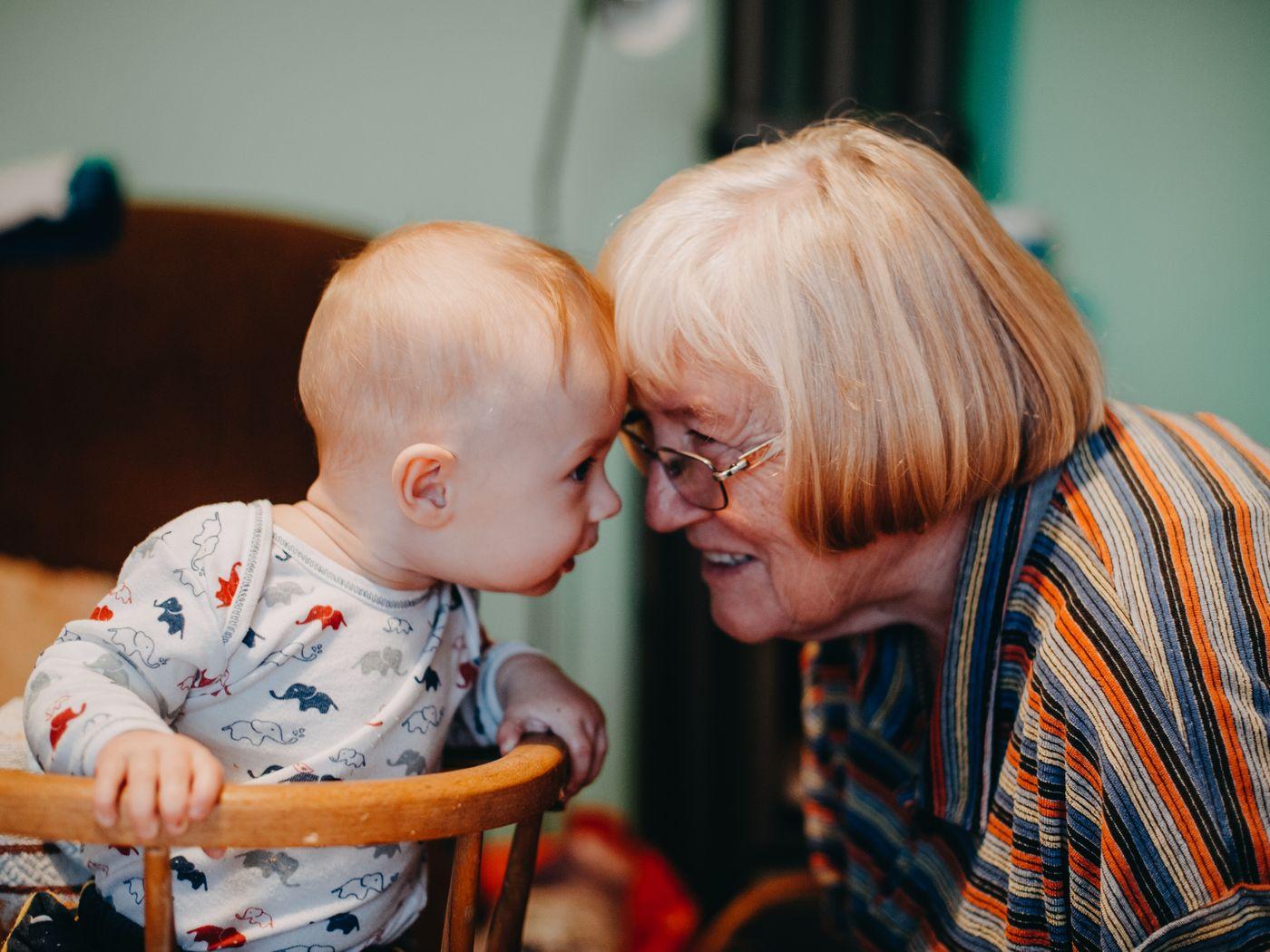
My mother has a voice she uses only with babies. It is lower and slower than her normal voice, and it has a rhythm that seems to arrive from somewhere older than either of us. When she held my daughter for the first time, I heard it and felt a door in my chest open.
The relationship between a child and a grandparent is not a bonus feature of family life. It is a distinct relationship with its own rules, its own history and its own particular kind of relief.
Care that does not need to be earned
For the parent, one of the gifts of a grandparent is the absence of performance. You do not have to be a good host. You do not have to explain why the child is not sleeping. You can be tired and ungrateful and still be someone's child.
My mother does not need me to be a competent adult. She needs me to bring the baby and sit down.
For the child, the gift is different. A grandparent is often an adult who has time in a way that parents do not. They can tell the same story again. They can be interested in the snail. They can offer a version of family history that is not filtered through the urgency of the school run.
The complications
Not every grandmother is available, and not every relationship is easy. There can be old wounds, different ideas about child-rearing, or a geography that makes closeness impossible. Some people find their grandmother-figures elsewhere, in a neighbour or an aunt or a friend's mother.
- Be specific about the help that would actually be useful.
- Let the relationship have its own shape, separate from your own history.
- Make room for the relationship to be imperfect without making it a crisis.
- If there is no grandparent nearby, look for the older adult who lights up when your child walks in.
I do not know how long we will have my mother's baby voice in the house. I know that I want my daughter to remember it. I want her to know that she was held by more than two people, and that the holding had a history.